NetSuite Migration Services in India: A Guide for Mid-sized Companies

The Indian mid-market is at a crossroads. Previously adequate legacy finance and operations systems now represent a source of friction. Compliance as a process is slow, forecasting is unreliable, and the ability to expand is dependent upon manual workarounds.
For these reasons, many organizations are moving to NetSuite ERP. NetSuite offers a unified cloud platform for finance, supply chain, compliance, and analytics, which will undoubtedly scale with growth.
Why Does Migration Matter for Mid-Market Organizations?
Mid-market organizations often have strong frontline operations but lean finance and IT teams. Complex systems requiring maintenance and ever-changing documentation aren't an option for lean organizations. Organizations need a more agile solution that provides data accuracy and automation.
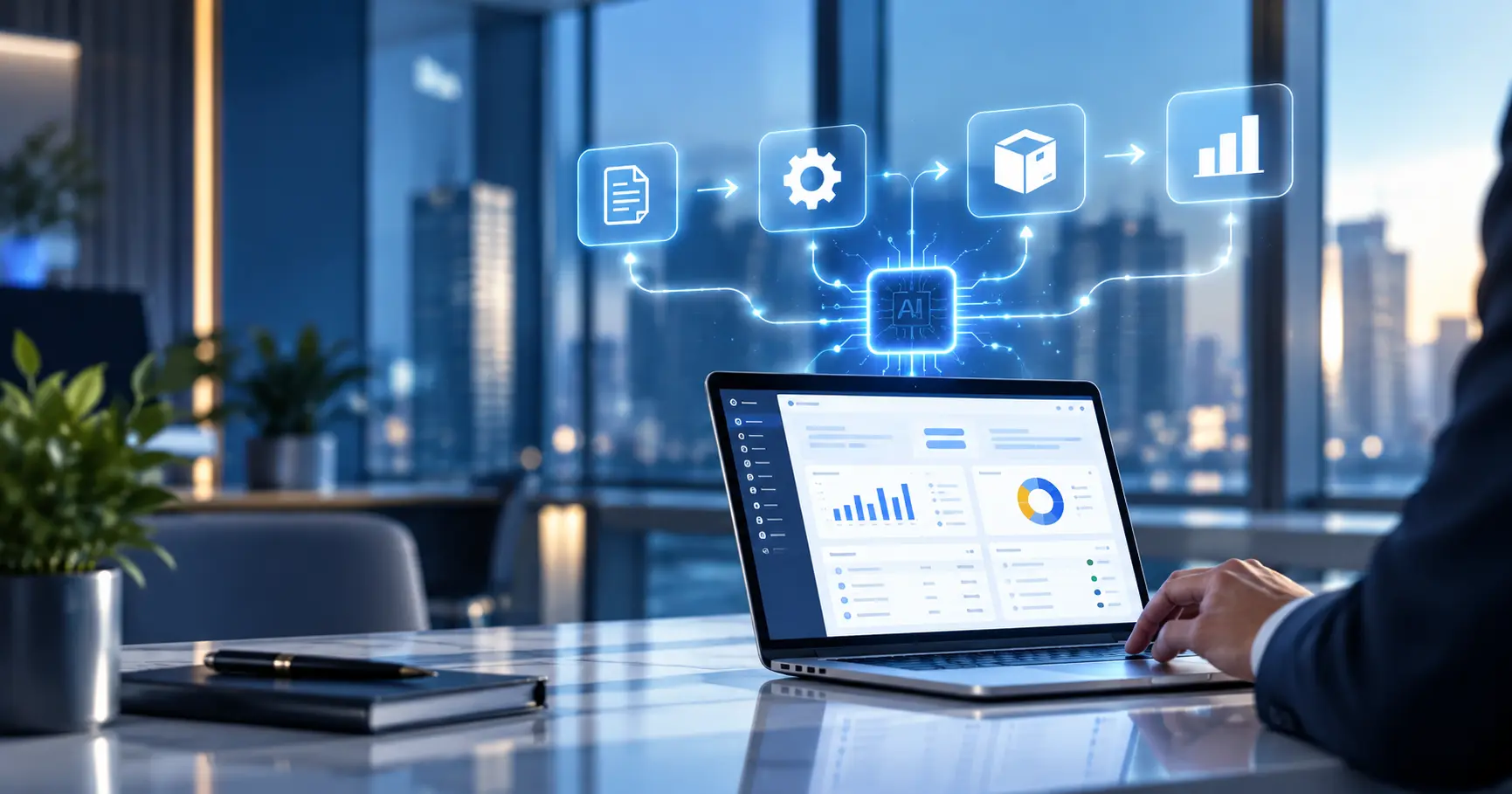
The embedded AI in NetSuite provides intelligent prompts, appropriate contextual insights, and process recommendations that lessen the human workload.
For example, CFO's no longer wait weeks for reconciliations, inventory reports, or other operations they request. Rather, they receive real-time clarity and can act on it instantly.
What's New in NetSuite for 2025?
Oracle has made significant investments in embedded intelligence across its ERP suite. The embedded capabilities provide contextual insights in the Analytics Warehouse, which explains inferred performance trend data, and helps leaders understand "why" instead of "what."
Text Enhance simplifies the production of descriptions, purchase orders, and notes with a single click, which will lead to faster completion of routine tasks. The most profound value is from the predictive analytics in NetSuite ERP, which empowers organizations to correctly project cash flow risks, predict demand fluctuations, and identify anomalies well before they impact revenue. Migration to NetSuite will be more than a system change; it will be an upgrade in intelligence.
How To Plan for the NetSuite Migration?
A structured roadmap will minimize unknowns while accelerating the adoption process; most mid-sized organizations in India follow a four-phase model:
-
Discovery and Fit-Gap - Mapping processes, determining GST and compliance requirements, and establishing reporting structures.
-
Data preparation - Cleansing of master records, verifying GSTINs, and normalizing units before import.
-
Testing and validation - Running simulations of GST Returns, e-invoices, and reconciliations to ensure the right output.
-
Go-Live and Hypercare - Freezing transactions, migrating balances, and providing users with support during the transition.
At every step of the way, NetSuite's AI integration is being employed to improve productivity from auto-generated supporting documentation to reduced report creation time, as well as guided recommendations for configuration.
Integrations That Empower Indian Enterprises
No mid-sized organization exists in a vacuum; companies need ERP to tie together their banks, e-commerce platforms, payment gateways, and compliance portals (i.e., the government).
With its architecture, NetSuite is able to accomplish this without endless configuration. This is most relatable with how finance teams can identify and reconcile Razorpay settlements directly within the ERP and generate e-way bills directly from the ERP—situating ERP as an integrated platform with other critical business processes.
When operations expand, NetSuite provides the extensibility to scale an organization with multi-subsidiary entities while retaining compliance across jurisdictions.
The Importance of Predictive Analytics
Traditional reporting merely looks backward. Mid-sized organizations in India cannot depend on old numbers to help them plan. Moving forward, finance leaders are adopting predictive analytics within their NetSuite ERP. This allows finance leaders to project receivables, model cash flow, and estimate inventory shortages.
With predictive dashboards, businesses have the capability to view risks and opportunities ahead of time, enabling them to respond to potential issues before they become significant.
His foresight is quickly becoming a competitive necessity, not just for India's mid-sized businesses amidst uncertain economic times, but for emerging markets as well.
Built-in Compliance for Indian Businesses
When compliance is an afterthought, ERP implementations are often unsuccessful. NetSuite was built with an understanding of India’s regulatory environment. It can support transactions compliant with GST and can issue e-invoices, generate e-waybills, and even calculate TDS/TCS out of the box.
By embedding AI in NetSuite into your compliance processes, finance teams can greatly reduce the risk of filing errors, receive notifications if there are any potential inaccuracies, and, importantly, produce Audit Ready statements in a fraction of the time. This ensures that CFOs do not have to spend tax season firefighting but rather assessing and planning.
Getting Data Migration Right
Poor data migration is the most common reason that ERP projects fail. For mid-market businesses, careful consideration must go into what data is moved— typically, masters, balances, and open transactions.
If you have historical data that is useful but do not want to be in your live system, you can still extract this data to do analysis from the NetSuite Analytics Warehouse. At each stage of the data migration, accuracy checks are non-negotiable.
Using the NetSuite AI integration, your teams can quickly identify duplicate vendors, establish consistency by cleansing entries, and confirm reconciliations to a faster cutover.
Security, Performance, and Scale
Many concerns regarding Enterprise Resource Planning (ERP) in the Cloud are based on security and performance. NetSuite provides both role-based access control, complete audit trails, and encrypted data handling.
Performance remains constant even during peak filing periods for GST. For companies considering aggressive growth, NetSuite ERP could give you scalability without the need for supporting infrastructure, making it a long-term method of operation instead of a stop-gap measure.
Pricing Considerations
Migration investments are based on scope. Quick projects are narrowly defined finance and compliance implementations that take place over two months.
Standard packages include supply chain and banking integrations, while full-scale, advanced-seat deployments include predictive analytics, AI features, and multi-subsidiary structures.
When mid-size organizations include the NetSuite ERP predictive analytics capabilities in their package, they are able to maximize planning accuracy and minimize the cost of uncertainty across their entire operations.
The Impact After Migration
Following a successful migration, the effects are often felt almost immediately. Financial close cycles become shorter, cash collections ramp up, and reporting grows faster. As forecasting becomes sharper, inventory turns rise.
In addition, with the inclusion of AI in NetSuite, companies will identify previously invisible inefficiencies—whether that be incandescent length of procurement time or unnoticed margin leaking—and fix them before they erode profitability.
The shift for leaders is more than operational; it changes how leaders think about making decisions, from being reactive and managing now to being proactive and leading growth.





0 Comments