How NetSuite WMS Automates Inventory Control and Streamlines Fulfillment Processes
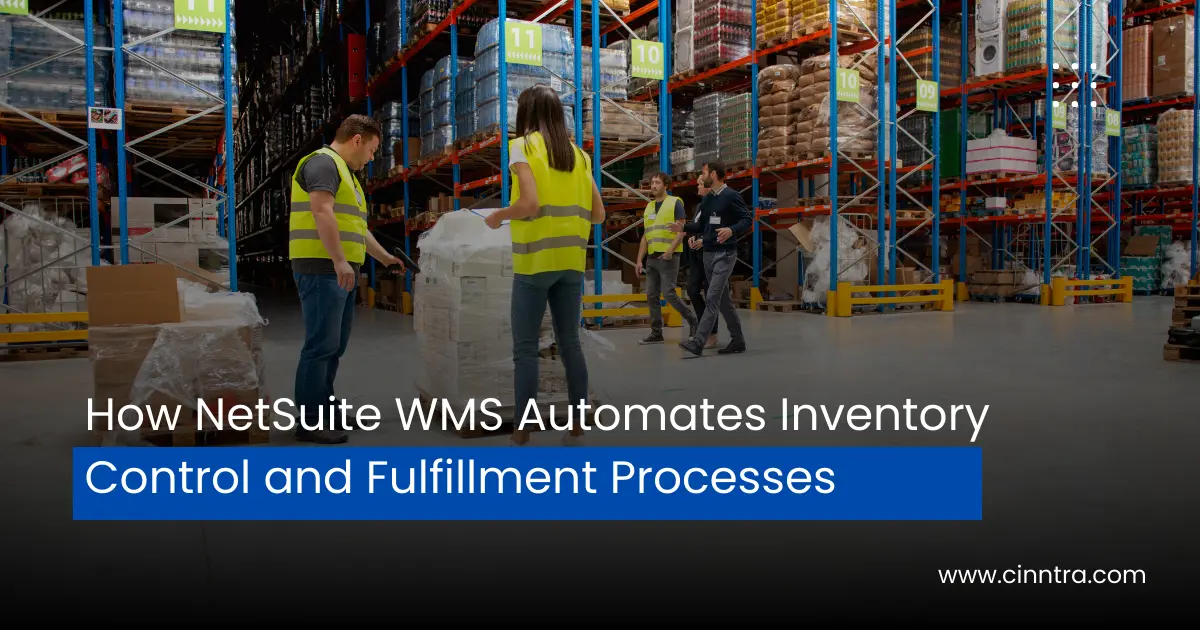
Operations in warehouses have a big impact on revenue growth and decline. Inaccurate inventory also causes working capital to be used excessively. Customers' loyalty is damaged if they cannot obtain their orders on time. Moreover, operational friction reduces profit margins. In other words, a mistake rate of 1% to 2% can cost a business hundreds of thousands of dollars every month in a market that is expanding quickly.
To handle this challenge, NetSuite Warehouse Management System (WMS) automates warehouse activities in a structured way that incorporates measurable controls with real-time visibility into each transaction.
The Economics of Inventory Precision
According to industry benchmarks for manual warehouses, inventory accuracy is typically between 92%-95%. From a financial standpoint, working with a company that carries $10 million in inventory with a 4% error rate has a potential for $400,000 in inventory inaccuracy due to either excess stock or "phantom" stock.
Through:
-
Bar Code Driven Receiving
-
System Directed Putaway
-
Real-Time Inventory Updates
-
Automated Validation of Bins
-
Continuous Cycle Counts
NetSuite WMS strives to achieve greater than 99% accuracy.
With each scan representing a milestone for control and with each system update produced instantly based on a movement, the physical inventory matches the digital records; now, inventory can be managed automatically.
Rather than going through a costly, disruptive annual physical count, organizations implement ongoing cycle counts that provide uninterrupted performance while improving inventory accuracy within their operation.
Automation That Reduces Fulfillment Friction
Labor and time make up a significant part of the cost associated with fulfilling orders; however, labor is affected directly by inefficient picking processes used in traditional warehouses. Inefficient picking can represent as much as 50%-60% of total labor cost.
Fulfillment will now be performed through structured and data-driven methods using NetSuite WMS:
1. Intelligent Picking Logic
The system can support multiple picking methods, such as wave, batch, and zone picking. Picking waves will be grouped together to minimize travel distance and delivered to workers using hand-held devices that provide optimized travel routes.
Result:
-
Decreased walking distance for employees to spread out and gather items from a given area.
-
Increased the number of picks completed per hour.
-
Fewer missed picks to shipped items.
2. Real-Time Task Assignment
Supervisors no longer assign employee tasks by hand. This is now dynamically distributed in real-time based on priority and availability.
Results:
-
Quicker cycle time for ordering goods.
-
More by balancing the workload of the workforce.
3. Automated Shipping Confirmation
Labels are printed automatically while tracking information is entered into the system shortly thereafter. Financial records reflect the shipment status without the employee entering their own data.
Results:
-
Quicker dispatching of goods.
-
Fewer documentation errors.
-
Better customer communication.
Within measurable results, typically businesses measure improved order fulfilment speed up to 20 – 35 per cent when utilizing structured warehouse automation.
Replenishment and Demand Alignment
Excess inventory ties up working capital. Inventory does not give up revenue, yet at the same time, too low of a supply means lost revenue. Based on inventory data is how goods will be maintained at the right amount.
The system will use rules for calculating the amount needed for reordering, maintaining order levels at safety stock levels, and reordering once inventory falls below predetermined levels automatically whenever possible through using the software's built in computerized rules and workflows.
Having this structure of control over the inventory balances within NetSuite's Inventory Control provides better opportunities to align the purchasing areas of the business with true demand signals versus intuitive purchasing from an experience perspective.
Some of the key impacts of utilizing low turnover, lengthy turnover times and a decrease in stock outages are the following:
Key impacts include:
-
Reduced stockouts
-
Lower carrying costs
-
Improved cash flow efficiency
-
Increased inventory turnover
Providing opportunities to increase the working capital that can be used for strategic growth initiatives after maximizing turnover.
Integration Through a Unified Platform
The value of the warehouse system is diminished if it does not integrate with both the financial and operational aspects of the business. The strength of the NetSuite enterprise resource planning system is in its unified design.
When goods move into the bookkeeping, it reflects the goods once they are taken from the stockroom into a distribution cycle. When a sales order is generated, it will trigger fulfillment workflows. When stock is taken from a facility, it will align purchasing with the amount of items used.
This process eliminates the creation of data silos and adds the following benefits:
-
Real-time margin visibility.
-
Accurate cost of goods sold tracking.
-
Ability to produce a consolidated summary of multi-location operating result reports.
-
Ability for executives to accurately review and access real-time key performance indicators (KPIs).
Decisions made by executive leadership teams will always be based on substantiated facts of ongoing operational performance within the organization.
Scalability and Modern Enhancements
As a company grows, its warehouse becomes increasingly difficult to manage. Companies must be flexible through:
-
Many different physical locations
-
More people ordering online, picking up in-store
-
Larger volumes of orders
Recently developed new technologies are changing the way that warehouses function. They are improving:
-
Mobile-first user interfaces
-
Configurable workflow automation
-
Advanced lot/serial tracking
-
Better demand forecasting tools
-
Cloud-native scalability
There is no longer a need to complete expensive hardware upgrades on the warehouse infrastructure since it is all hosted in the cloud. This means companies now have the ability to expand users, physical locations, and transactional volume without disrupting day-to-day operations.
Quantifiable Business Outcomes
The measurable benefits of having automation, structured rather than fragmented processes, can be seen:
-
Up to 99% inventory accuracy
-
Up to 20-35% reduction in the time to fill an order
-
Decrease in labor costs associated with each order
-
Decrease in return rates resulting from order-picking errors
-
Improved on-time shipping performance
-
Improved Working Capital Efficiency
These evidence-based results will shift the perception of the warehouse from being a reactive cost center to being a strategic enabler for growth.
Operational Discipline as Competitive Advantage
Execution is paramount in demonstrating credibility. Customers seldom forgive late shipments or inaccurate orders. Investors will continue to evaluate companies by their efficiency of operation. And, leadership’s decision-making will rely on accurate and reliable reporting.
Through the implementation of NetSuite WMS, companies will have rationality instilled through their warehouse operations, providing accountability through guided workflows, increased levels of control, and real-time synchronization with their NetSuite ERP system.
In the modern world of commerce, precision is not just preferred but necessary to achieve success.






0 Comments